
AI Chargeback Prevention: Protecting Your Merchant Revenue in 2026
Published:

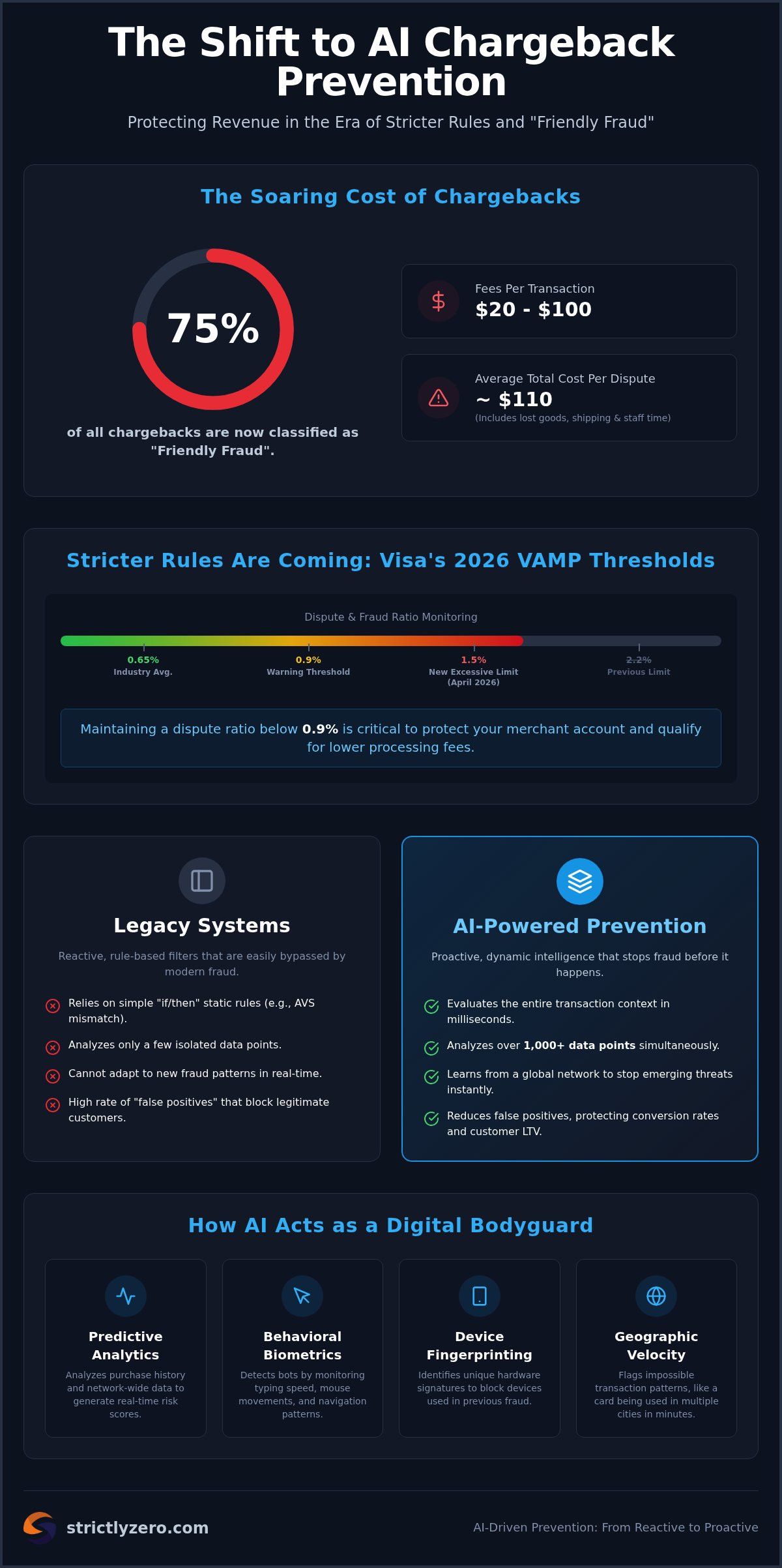
Did you know that 75% of all chargebacks are now classified as “friendly fraud,” and as of April 2026, Visa’s VAMP program has slashed the “excessive” threshold to just 1.5%? It’s exhausting to watch your hard-earned revenue vanish into a black hole of disputes that feel impossible to win. You’re likely tired of spending hours on manual management only to face fees that range from $20 to $100 per transaction. Implementing ai chargeback prevention is no longer just an option; it’s a necessity for any merchant wanting to survive these tightening regulations.
You’ll discover how AI-driven intelligence moves your management from reactive recovery to proactive prevention, saving your business thousands in hidden fees. By using automated protection, you can keep your dispute ratios below 0.9% and protect your merchant account standing across every channel. We’ll explore how AI acts as a digital bodyguard for your pricing engine, slashing management overhead and eliminating the hidden costs of fraud before they hit your bottom line. It’s time to stop fighting losing battles and start preventing them entirely.
Key Takeaways
- Learn why friendly fraud now accounts for 75% of disputes and how to navigate Visa’s stricter 2026 monitoring thresholds.
- Discover how ai chargeback prevention replaces outdated static rules with dynamic intelligence that analyzes thousands of data points in milliseconds.
- Understand why manual fraud filters fail to stop modern syndicates and how automated systems provide the 24/7 scalability your business needs.
- Follow a five-step strategy to audit your dispute data and integrate an AI-first gateway directly with your existing order management tools.
- See how built-in fraud prevention acts as a digital bodyguard for your Smart Pricing Engine, keeping risk profiles low to maintain a zero-fee merchant environment.
Table of Contents
- The Real Cost of Chargebacks and Friendly Fraud in 2026
- How AI Revolutionizes Chargeback Prevention in Real-Time
- AI vs. Manual Fraud Filters: Why Legacy Systems Fail
- 5 Steps to Implementing an AI-First Chargeback Strategy
- Strictly's AI-Driven Fraud Prevention: Trust as a Payment Processor
The Real Cost of Chargebacks and Friendly Fraud in 2026
Chargebacks were originally designed as a consumer protection shield, but they’ve evolved into a merchant’s most expensive hidden fee. In 2026, the cost of doing business online includes more than just processing rates; it includes the constant risk of revenue reversal. Friendly fraud now accounts for 75% of all credit card disputes, making it a larger threat than traditional identity theft. This trend isn’t slowing down, and for high-volume omni-channel merchants, manual review is no longer a viable way to protect the bottom line.
The financial damage goes far beyond the lost sale. When a customer files a dispute, the processor hits you with fees that typically range from $20 to $100. If you factor in the cost of lost merchandise, wasted shipping expenses, and the staff time required to gather evidence, the average total cost of a single chargeback is approximately $110. Relying on ai chargeback prevention is the only way to scale without hiring a massive team of analysts who still can’t keep up with 24/7 global transaction speeds. Human teams simply can’t vet every transaction in real-time without causing massive checkout friction.
Understanding the 2026 Dispute Thresholds
As of April 1, 2026, the stakes for your merchant account are higher than ever. Visa’s VAMP program now flags accounts once they hit a combined fraud and dispute ratio of 1.5%, a sharp drop from the previous 2.2% limit. While the industry average sits around 0.65%, crossing the 0.9% “warning” threshold can trigger mandatory remediation and higher per-transaction costs. Maintaining a low risk profile is essential if you want to qualify for zero fee credit card processing. If your ratios climb, your ability to eliminate processing costs disappears, as network monitoring programs often force you into high-risk pools with much higher fees.
The Anatomy of a Friendly Fraud Dispute
Why does this happen? Sometimes it’s buyer’s remorse; other times, a customer simply doesn’t recognize a charge on their statement because of a vague billing descriptor. By utilizing ai chargeback prevention, merchants can ensure that descriptors are dynamic and recognizable, significantly reducing the “I don’t know what this is” phone calls to the bank. AI tools detect patterns where a customer is likely to dispute a charge before the transaction even clears by analyzing purchase history and device fingerprints. This proactive approach stops the cycle of confusion before it turns into a costly dispute. Friendly fraud is the primary threat to modern digital commerce.
How AI Revolutionizes Chargeback Prevention in Real-Time
Legacy payment gateways relied on “static rules” to fight fraud. These were simple “if/then” commands, such as “if the shipping address doesn’t match the billing address, decline the order.” Modern fraud syndicates bypass these hurdles with ease. ai chargeback prevention represents a fundamental shift toward dynamic intelligence. Instead of looking at a few isolated factors, the system evaluates the entire context of a transaction in milliseconds, deciding whether to authorize, flag, or decline based on real-time risk scores.
AI doesn’t just look at the card number. It analyzes over 1,000 data points including browser settings, time of day, and connection type before authorization. This creates a powerful feedback loop. The system learns from every successful transaction and every dispute across a global network. If a merchant in another industry flags a specific device as fraudulent, your gateway knows instantly. This intelligence helps mitigate The Real Cost of Friendly Fraud by stopping suspicious users before they reach the checkout button. Crucially, this reduces false positives. You won’t accidentally block a loyal customer just because they’re traveling or using a new device, which keeps your conversion rates high.
Predictive Analytics and Behavioral Biometrics
Modern AI tracks “behavioral biometrics” to separate humans from bots. It monitors typing speed, mouse movements, and navigation patterns. Humans interact with a checkout page in a specific, non-linear way, while bots are often too efficient or erratic. Geographic and IP velocity checks also play a role. If a single card is used across multiple cities in minutes, the AI flags the buying spree. Device fingerprinting identifies hardware used in previous scams, ensuring that even if a fraudster changes their IP or email, their hardware remains a known threat.
Smart 3D Secure (3DS) Optimization
3D Secure used to be a conversion killer because it forced every customer to enter a code, creating friction. AI-driven optimization fixes this by only triggering 3DS for high-risk transactions. This “frictionless flow” ensures low-risk users enjoy a fast checkout, while suspicious ones face extra verification. The biggest advantage is the “liability shift.” When 3DS is successfully applied, the card issuer often becomes responsible for any fraud-related disputes. To keep your risk profile low and your profits high, consider using AI-driven fraud prevention tools as part of your payment stack.
AI vs. Manual Fraud Filters: Why Legacy Systems Fail
Traditional fraud prevention relies on rigid “If/Then” logic. These filters are easy for modern fraud syndicates to map and bypass. If you only block transactions from a specific country or above a certain dollar amount, criminals simply adjust their tactics to stay just under your radar. Human teams struggle to keep up with 24/7 global e-commerce volume. You can’t expect staff to review every transaction at 3 AM with the same precision they have at 10 AM. By switching to ai chargeback prevention, you eliminate human bias and fatigue entirely. It’s also a matter of simple math. The cost of hiring a dedicated fraud team far outweighs the subscription or integrated fee of an AI-driven payment processor. AI doesn’t take vacations; it just works.
The ‘Rule Fatigue’ Problem
Legacy systems often suffer from “rule fatigue.” Over time, merchants stack thousands of conflicting rules on top of each other. This creates a messy user experience where legitimate customers get blocked by accident. AI requires zero manual maintenance. It doesn’t need weekly rule updates because it learns on its own. Many industry experts report that merchants can reduce “false declines” by 20% simply by letting machine learning handle the decision-making process. This means more approved sales and fewer frustrated customers calling your support line.
Data Silos vs. Unified Intelligence
A major weakness of legacy filters is that they operate in a vacuum. They only see your specific data. If a fraudster hits ten other stores before yours, a legacy system won’t know until it’s too late. AI-driven systems utilize unified intelligence. They see patterns across millions of global transactions in real-time. This network effect identifies emerging fraud trends before they reach your storefront. When you link this ai chargeback prevention intelligence to omni-channel payment processing, you get a consistent shield across your website, mobile app, and even in-person transactions. It’s a level of protection that no human team could ever replicate.
5 Steps to Implementing an AI-First Chargeback Strategy
Transitioning to an AI-first strategy requires more than just flipping a switch. It’s a systematic overhaul of how your business views risk. Start by auditing your current dispute data to identify whether your primary fraud sources are coming from specific regions, products, or customer behaviors. Once you understand the “where” and “why,” you can integrate an AI-driven gateway that communicates directly with your CRM and order management system. This ensures that every piece of customer history, from previous purchase frequency to support ticket history, is used to inform the ai chargeback prevention engine. This unified view stops fraudsters who might have slipped through a siloed system.
Next, enable Smart 3DS to shift liability to the bank without hurting your conversion rates. You should also optimize your billing descriptors. If a customer sees a cryptic string of numbers on their bank statement, they’ll likely hit the dispute button. AI can help ensure your brand name is clear and recognizable for every transaction. Finally, monitor your dispute ratio weekly. If you see it creeping toward the industry average of 0.65%, adjust your AI sensitivity levels to be more aggressive. This constant tuning keeps your merchant account safe from the 1.5% Visa VAMP threshold.
Optimizing the ‘Pre-Authorization’ Phase
The pre-authorization check is the most critical gatekeeper in your defense strategy. This is where the AI decides to let a transaction through or stop it before it even reaches the bank for approval. You can set up “soft” declines for suspicious IP addresses, which asks the user for more info or triggers a manual verification step rather than blocking them outright. At a bare minimum, you must implement Address Verification Service (AVS) and CVV checks. AI enhances these legacy tools by comparing them against millions of other data points to spot sophisticated spoofs that traditional filters would miss.
Post-Transaction Communication
Prevention doesn’t stop once the “buy” button is clicked. Use AI to send automated order confirmations and real-time tracking updates so customers never feel ignored. Tools like Order Insight and Ethoca play a vital role here by resolving disputes before they ever become official chargebacks. If a customer is unhappy, provide an easy refund path. It’s much cheaper to issue a refund than to pay a $25 chargeback fee and risk your merchant standing. To protect your revenue and lower your risk profile, partner with a processor that offers built-in AI fraud tools.
Strictly’s AI-Driven Fraud Prevention: Trust as a Payment Processor
Choosing a payment processor with built-in AI is fundamentally different from using third-party “bolt-on” software. When fraud prevention is an after-thought, data often gets lost in transition between the gateway and the security provider. Strictly integrates ai chargeback prevention directly into the heart of the transaction flow. This means your “digital bodyguard” sees the data at the exact moment of authorization, leaving no room for the latency that hackers exploit. This native intelligence works seamlessly with our Smart Pricing Engine, ensuring that your business remains profitable by stopping losses before they start.
Whether you’re using a virtual terminal for phone orders, sending payment links via email, or running a high-volume online store, our omni-channel platform provides a unified shield. For ISO and MSP partners, we offer ChurnIQ™ and advanced risk monitoring tools. These features help you maintain high merchant retention by keeping your partners’ risk profiles clean and their processing costs predictable. By centralizing your security and processing, you gain a clearer view of your business health without the clutter of multiple dashboards.
The Synergy of AI and Zero-Fee Processing
The success of any zero-cost merchant environment depends entirely on risk management. High dispute ratios are the fastest way to lose access to preferred rates and specialized programs. By keeping your dispute levels well below the network thresholds, you make your zero fee credit card processing model more sustainable over the long term. This synergy allows you to eliminate both processing fees and fraud losses simultaneously. It’s a comprehensive approach to protecting your bottom line that third-party apps simply can’t match. This level of protection is a core component of our surcharge programs, which prioritize merchant profitability above all else.
Scale Your Business with Confidence
Strictly provides the essential infrastructure for ISOs and developers to build secure, scalable payment ecosystems. We believe that trust is a service, not just a feature. Security is the foundation of everything we build, from our partner management tools to our invoicing engines. When you don’t have to worry about the next wave of friendly fraud or a sudden spike in chargeback fees, you can focus on what actually matters: growing your brand. Our ai chargeback prevention evolves with your business, ensuring that as you scale, your defenses get stronger rather than thinner. It’s about providing the peace of mind you need to enter new markets and channels without hesitation.
Scale your business with Strictly’s AI-driven platform today.
Future-Proof Your Business Against Friendly Fraud
The payment landscape in 2026 demands more than just basic filters. With network thresholds tightening, your merchant account’s survival depends on stopping disputes before they ever reach the bank. We’ve explored how transitioning from static rules to dynamic intelligence saves you from the mounting costs of friendly fraud. By implementing ai chargeback prevention, you aren’t just fighting lost revenue; you’re building a proactive defense for your entire business. This approach ensures your risk profile remains low, allowing you to maintain the benefits of zero-fee processing without the threat of account termination or rising fees.
Strictly provides the infrastructure you need to thrive. Our AI-driven fraud prevention is built directly into the core platform, working alongside compliant surcharge and dual pricing engines to protect your bottom line. Whether you’re selling online or via a virtual terminal, our trusted omni-channel infrastructure is designed for the challenges of 2026. Secure Your Revenue with Strictly’s AI-Driven Platform. You have the tools to turn the tide against disputes. It’s time to stop reacting and start growing with total confidence.
Frequently Asked Questions
What is the difference between chargeback prevention and chargeback recovery?
Prevention stops the transaction before it occurs, whereas recovery is the process of fighting a dispute after the bank has reversed the funds. ai chargeback prevention focuses on real-time risk assessment to block suspicious orders at the gateway. Recovery involves gathering evidence to prove a transaction was legitimate. While recovery can win back revenue, prevention is superior because it avoids non-refundable fees and protects your merchant account standing from network monitoring programs.
Can AI chargeback prevention actually stop ‘friendly fraud’?
AI identifies patterns of friendly fraud by analyzing historical behavior and device fingerprints across a global network. It detects when a user has a history of disputing legitimate charges across different stores. By flagging these high-risk profiles during the checkout phase, the system stops the transaction before the customer can even hit the buy button. This proactive approach is the only way to effectively combat the rise of intentional consumer fraud.
Will implementing AI fraud filters increase my false decline rate?
Machine learning actually reduces false declines by moving away from rigid, static rules. Traditional filters often block legitimate customers simply because they are traveling or using a new device. AI analyzes thousands of data points, including behavioral biometrics and typing speed, to distinguish between real buyers and bots. This precision ensures you don’t lose revenue from good sales while maintaining a digital bodyguard for your pricing engine.
Is AI chargeback prevention compliant with PCI DSS standards?
AI-driven fraud tools are fully compliant with PCI DSS standards. These systems use tokenization and encryption to analyze transaction patterns without exposing sensitive cardholder data to unauthorized parties. By integrating these tools, you’re strengthening your overall security posture within the required regulatory framework. It’s a standard requirement for any modern payment processor to ensure that advanced intelligence doesn’t compromise the privacy or safety of the consumer’s financial information.
How much does AI-driven fraud prevention typically cost for a small business?
The cost of ai chargeback prevention typically depends on your transaction volume and industry risk profile. Some processors include these tools as a core part of their platform, while others may charge a small per-transaction fee. You should check with your provider for specific rates tailored to your business. Generally, the investment pays for itself by eliminating non-refundable chargeback fees and the cost of lost merchandise from fraudulent sales.
What happens if my dispute ratio goes above 1% in 2026?
Crossing the 0.9% threshold in 2026 triggers a warning from card networks. If your ratio hits 1.5% under Visa’s VAMP program, you’re classified as an “excessive” merchant. This leads to mandatory remediation, increased monitoring fees, and potential loss of your merchant account. Staying below 1% is critical for maintaining your standing and keeping your risk profile low enough to qualify for the most competitive zero-fee processing programs.
Does Strictly’s AI work for both online and virtual terminal payments?
Strictly’s AI works across all channels, including online stores, payment links, and virtual terminal payments. Whether you’re keying in a phone order or a customer is checking out on a mobile device, the system evaluates the risk in milliseconds. This omni-channel protection ensures that fraudsters can’t exploit different parts of your business. It provides a unified shield that protects your revenue regardless of how your customers choose to pay.
How does Smart 3D Secure help with chargeback prevention?
Smart 3D Secure uses AI to trigger extra authentication only for transactions that appear high-risk. This ensures that low-risk customers enjoy a frictionless checkout experience without unnecessary interruptions. The biggest benefit is the “liability shift.” When a transaction is successfully verified through 3DS, the card issuer often becomes responsible for any fraud-related disputes. This effectively moves the financial risk away from your business and onto the bank.