
How to Offer Buy Now Pay Later (BNPL) to Customers in 2026
Published:
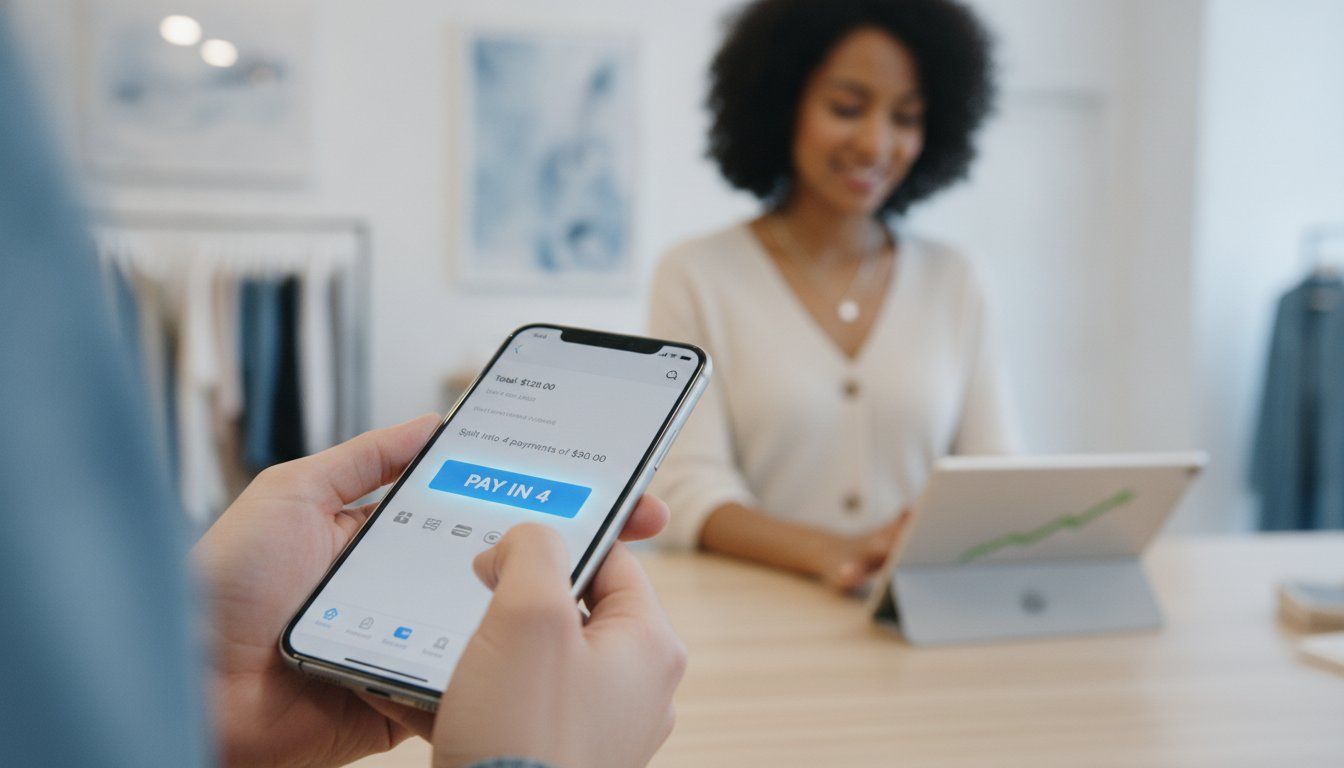
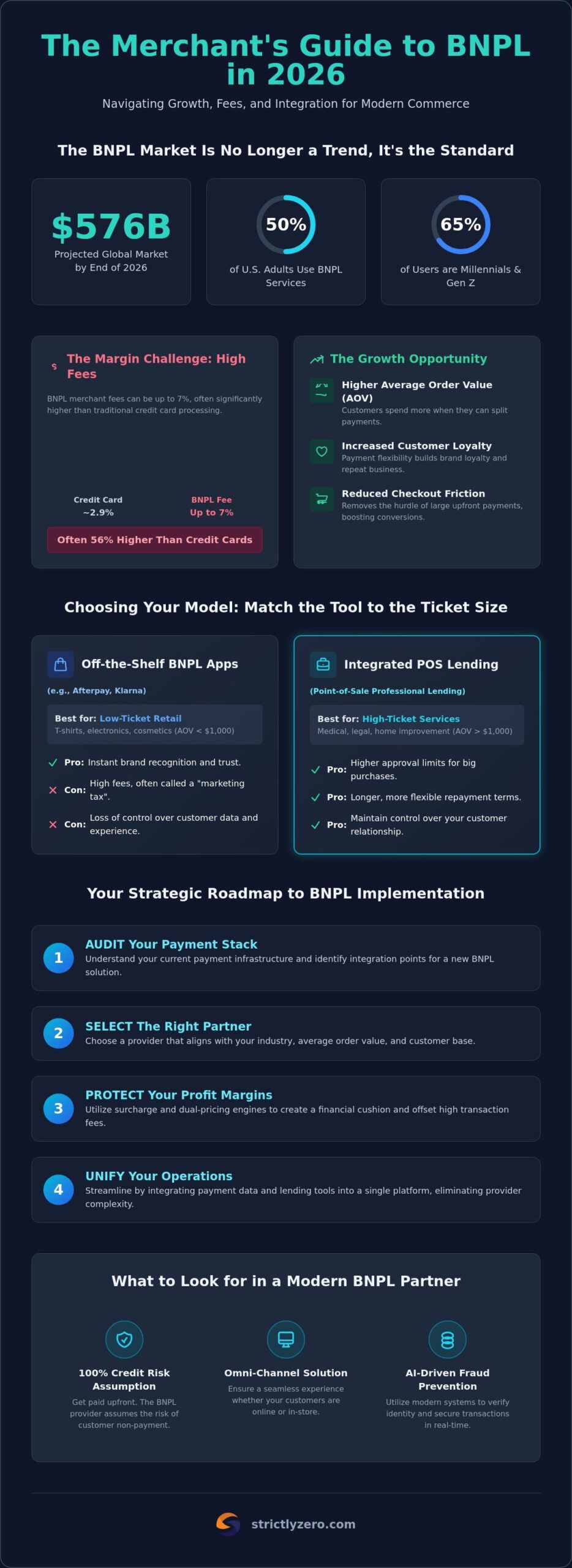
By the end of 2026, the global Buy Now Pay Later market is projected to hit a staggering $576 billion in transaction value. Yet, many retailers are hesitant because BNPL merchant fees can climb as high as 7 percent. This is often 56 percent higher than traditional credit card processing. You want to capture the 50 percent of U.S. adults who now use these services, but you shouldn’t have to sacrifice your bottom line to do it. Learning how to offer buy now pay later to customers shouldn’t feel like a choice between growth and profitability.
We understand that the complexity of integrating multiple providers and the fear of credit risk can be overwhelming. This article provides a strategic roadmap to implementing BNPL and POS lending to skyrocket your conversion rates while protecting your margins. You’ll discover how to find a payment partner that handles the lending risk and utilizes AI-driven fraud prevention to keep your transactions secure. We will break down the latest 2026 regulations and show you how to choose an omni-channel solution that increases your average order value without the technical headache.
Key Takeaways
- Understand why BNPL has transitioned from a checkout luxury to an essential omni-channel standard for capturing modern consumer demand in 2026.
- Learn exactly how to offer buy now pay later to customers by auditing your current payment stack and selecting a provider that aligns with your specific industry.
- Evaluate the differences between off-the-shelf apps and integrated POS lending to find the most cost-effective fit for your business’s average order value.
- Discover how to protect your profit margins from high transaction fees by utilizing surcharge and dual pricing engines to create a necessary financial cushion.
- Streamline your operations by unifying payment data and lending tools into a single platform, eliminating the complexity of managing multiple disconnected providers.
Table of Contents
- What is Buy Now Pay Later and Why Your Business Needs It in 2026
- Choosing the Right Model: BNPL Apps vs. Integrated POS Lending
- Step-by-Step: How to Offer Buy Now Pay Later to Your Customers
- The Margin Challenge: Offsetting BNPL Fees with Surcharge Programs
- Partnering with Strictly: A Unified Solution for 2026
What is Buy Now Pay Later and Why Your Business Needs It in 2026
To understand what is buy now, pay later, think of it as a modernized version of layaway. In 2026, it’s a short-term financing solution where the merchant gets paid upfront while the buyer pays in installments. It has evolved from a niche checkout option to an expected standard for omni-channel commerce.
To better understand this concept, watch this helpful video:
Millennials and Gen Z, who make up about 65 percent of users, view BNPL as a core financial strategy. These shoppers often prefer predictable installment plans over traditional credit card interest. By offering this flexibility, businesses gain several key advantages:
- Higher Average Order Value (AOV): Customers feel comfortable spending more when the cost is split.
- Increased Customer Lifetime Value: Flexibility builds brand loyalty and repeat business.
- Reduced Friction: Removing the hurdle of a large upfront payment increases checkout completion.
The Evolution of BNPL: From Retail to Service-Based Industries
It isn’t just for clothes anymore. Professional services like legal firms and home repair companies are adopting POS Lending to help clients manage high-ticket costs. For example, enthusiasts looking for high-performance motorcycle upgrades can visit Suspension Store to see how specialized components are made more accessible through flexible financing. There is a distinct difference between “Pay-in-4” models used for micro-retail and longer-term installment loans for big purchases. BNPL acts as a powerful conversion tool that bridges the gap between customer desire and their immediate budget.
How BNPL Providers Handle Risk and Fraud
One of the biggest hurdles for merchants learning how to offer buy now pay later to customers is the fear of non-payment. However, the provider typically assumes 100 percent of the credit risk. You receive your funds upfront even if the customer misses a payment later. Modern systems also utilize AI-driven fraud prevention to verify identities and secure transactions in real-time, often resulting in lower chargeback rates than traditional credit cards.
As you explore how to offer buy now pay later to customers, remember that 2026 is the year of regulation and maturity. With over 380 million global users, this isn’t a trend you can ignore. It’s a strategic move to ensure your business remains competitive in a market where 50 percent of U.S. adults have already embraced installment-based payments.
Choosing the Right Model: BNPL Apps vs. Integrated POS Lending
Deciding how to offer buy now pay later to customers depends heavily on your business model and your average ticket size. If you’re selling $50 t-shirts, a quick “Pay-in-4” app might be sufficient. However, if you’re a service provider or high-ticket retailer with orders exceeding $1,000, a standard retail app often lacks the necessary approval limits. Understanding how BNPL loans work from a consumer perspective is the first step in choosing a model that won’t frustrate your buyers at the finish line.
The Pros and Cons of Big-Brand BNPL Providers
Off-the-shelf apps like Afterpay or Klarna bring instant brand recognition. For a new e-commerce site, these logos can act as a trust signal that encourages a first-time buyer to convert. But this trust comes at a steep price. These providers often charge a “marketing tax” in the form of high transaction fees because they view their platform as a referral engine for your business. You also lose control over the customer data and the post-purchase experience, as the customer is technically interacting with the app’s ecosystem rather than yours.
Why High-Ticket Businesses Prefer Professional POS Lending
Businesses in the medical, legal, or home improvement sectors require a more robust solution. Professional POS Lending offers higher approval limits and longer repayment terms that make sense for a $5,000 or $10,000 invoice. These systems integrate directly with your virtual terminal, allowing you to offer financing during a phone consultation or an in-person meeting. Strictly’s POS lending options provide this seamless experience, ensuring your professional branding remains front and center while the backend handles the complex credit logistics.
Credit checks also play a massive role in conversion rates. Most retail-focused BNPL products use “soft” credit pulls that don’t affect a customer’s credit score, which is ideal for smaller impulse buys. Larger loans may require a “hard” check, but they offer the stability and structure needed for significant investments. Unifying these options into a single ecommerce payment processing platform prevents your tech stack from becoming a “Frankenstein” of disconnected tools. If you’re looking to scale, you might want to explore a unified payment strategy that balances these different lending models without increasing your administrative workload.
Step-by-Step: How to Offer Buy Now Pay Later to Your Customers
Implementing a financing solution requires more than just a technical toggle. It’s a strategic shift in how you present value to your buyers. If you’re looking at how to offer buy now pay later to customers, start by auditing your current payment stack. You need to verify that your existing software is compatible with modern lending APIs. This prevents technical bottlenecks that could slow down your checkout process or cause transaction errors during peak hours.
Once your infrastructure is ready, follow these specific steps to launch:
- Select a targeted provider: Don’t choose a partner based on brand name alone. Pick one that matches your specific industry and average order value (AOV).
- Integrated Checkout and POS: Ensure the BNPL option appears both in your online cart and your physical point-of-sale system for a true omni-channel experience.
- Shift Marketing Focus: Update your product pages to highlight “low monthly payments” instead of just the total sticker price.
- Sales Team Training: Teach your staff how to present financing as a direct solution to price objections during the discovery phase of a sale.
Technical Integration: API vs. Virtual Terminal
You have two primary paths for technical setup. An API-first approach is ideal for custom e-commerce checkouts where you want to maintain a specific brand aesthetic. For businesses that handle orders via phone or in a professional office setting, using a virtual gateway is often more efficient. This allows your team to trigger financing applications manually during a consultation. This flexibility ensures that whether a customer is on a mobile device or standing in your showroom, the application process remains frictionless.
Marketing BNPL: Best Practices for Higher Conversion
Effective marketing is what turns a payment feature into a growth engine. According to recent BNPL market trends, consumers are far more likely to convert when they see “as low as” pricing early in the shopping journey. Don’t hide your financing options on the final checkout page. Display them prominently on high-traffic product pages and use email marketing to re-engage cart abandoners by showing them how affordable their desired items can be.
In 2026, transparency is a legal requirement. New regulations in the UK and EU mean you must clearly disclose lending terms in your advertisements to stay compliant. When you master how to offer buy now pay later to customers with both technical ease and marketing clarity, you stop being just a merchant and start being a partner in your customer’s financial journey.
The Margin Challenge: Offsetting BNPL Fees with Surcharge Programs
When businesses research how to offer buy now pay later to customers, they often hit a wall once they see the price tag. While standard credit card processing might cost 2 percent to 3 percent, BNPL merchant fees frequently range from 5 percent to 7 percent. If your business operates on a 10 percent net margin, a 6 percent transaction fee effectively wipes out more than half of your profit on every financed order. This “hidden cost” makes installment payments unsustainable for many low-margin retailers unless they have a strategy to reclaim those points.
Strictly’s zero fee credit card processing model creates the financial cushion you need to absorb these higher lending costs. By eliminating the fees on your standard credit and debit transactions, you free up significant capital. You can then reinvest these processing savings directly into your BNPL marketing budget or use them to offset the premium you pay for POS lending services. It’s about balancing your total cost of acceptance across all payment types.
Understanding Surcharge and Dual Pricing Compliance
Implementing a surcharge program isn’t as simple as adding a fee at the register. You must navigate a complex web of state-by-state regulations and card brand rules. Strictly’s Smart Pricing Engine automates this compliance, ensuring your system applies the correct logic based on the customer’s location and card type. By automating the pass-through of standard processing costs to the consumer, a surcharge program can save a merchant thousands in annual fees that would otherwise drain their cash flow. This allows you to offer a cash discount to price-sensitive shoppers while maintaining your margins on credit transactions.
Strategic Pricing: Balancing Financing and Processing Costs
Success with installment lending depends on your “Effective Rate.” This is the average cost of all your payment methods combined. Merchants who utilize zero fee merchant services for their day-to-day sales are far more likely to succeed with BNPL because their baseline costs are near zero. When you present dual pricing to customers, you offer transparency. You aren’t hiding fees; you’re giving them the choice between a lower cash price or the convenience of credit and financing.
Mastering how to offer buy now pay later to customers requires a dual-track strategy: driving high-conversion lending while maintaining zero-fee processing elsewhere. This balanced approach ensures that your growth in sales volume doesn’t lead to a decline in net profitability. To see how this fits your specific business model, you should explore our Surcharge & Dual Pricing Engine today.
Partnering with Strictly: A Unified Solution for 2026
Managing multiple payment providers in 2026 is a recipe for operational chaos. Learning how to offer buy now pay later to customers is the first step, but the second is ensuring that this new feature doesn’t break your existing workflow. Strictly provides a single platform that brings together omni-channel payment processing, surcharging, and POS lending. This eliminates the “Frankenstein” tech stack where different tools for invoicing, fraud prevention, and financing don’t talk to each other. When your systems are fragmented, you lose time on manual reconciliation and risk making errors that impact your bottom line.
By unifying your payment data, you get a clear picture of your cash flow and customer behavior without jumping between five different dashboards. Fraud tactics have become increasingly sophisticated, and our AI-driven fraud prevention protects your business by analyzing transaction patterns in real-time. This security layer is built directly into our processing engine. Whether a customer pays via a virtual terminal or a BNPL installment plan, your revenue remains secure from the latest 2026 threats. Our scalable solutions are designed to grow with you, whether you are a direct merchant or an ISO partner managing a large portfolio.
Why a Unified Platform Beats Multiple Third-Party Integrations
Consolidated reporting is a game-changer for growing businesses. You can see all your credit card and BNPL data in one place, which makes daily reconciliation simple. Using one API for all your payment needs reduces technical debt and prevents the bugs that often come with stacking multiple third-party integrations. If a problem arises, you have one point of contact for support instead of being bounced between different help desks. This streamlined approach allows you to focus on growth rather than troubleshooting software conflicts. It’s about having a single source of truth for every dollar that enters your business.
Getting Started with Strictly’s POS Lending
Applying for our POS lending program is straightforward. Once you’re approved, you can start offering financing immediately, giving your customers the flexibility they expect without the usual technical headaches. Our platform is built to handle the complexities of how to offer buy now pay later to customers while you maintain your professional branding. For those managing multiple accounts or working as partners, our partner management tools like ClearSplit™ automate commissions and simplify oversight. You don’t have to choose between high conversion rates and manageable margins anymore. You can have both in one unified system.
Scale your business with Strictly’s omni-channel payment platform today.
Future-Proof Your Checkout Strategy
By now, you see that Buy Now Pay Later is no longer just an optional feature; it’s a fundamental shift in consumer behavior. Successfully implementing this technology requires a balance between increasing your average order value and protecting your hard-earned margins from high transaction fees. Once you understand how to offer buy now pay later to customers, the focus shifts to selecting a partner that unifies your data and simplifies your operations.
Strictly offers the only all-in-one platform that combines high-ticket POS lending with a Smart Pricing Engine for 50-state compliance. You don’t have to worry about the “Frankenstein” tech stack or hidden costs anymore. With AI-driven fraud prevention included and ClearSplit™ for automated partner residuals, you can scale with total confidence. It’s time to stop letting high fees dictate your growth and start giving your customers the flexibility they demand. You have the roadmap; now it’s time to take the lead in your industry.
Start offering POS Lending and eliminate your fees with Strictly today
Frequently Asked Questions
Is offering Buy Now Pay Later worth it for small businesses?
Offering Buy Now Pay Later is highly beneficial for small businesses because it directly addresses cart abandonment and increases average order value. By 2026, over 380 million people globally are expected to use these services. While fees are higher than traditional credit cards, the surge in sales volume often outweighs the cost. It’s a strategic move to capture younger demographics like Millennials and Gen Z who account for 65 percent of all users.
What is the average fee for a merchant to offer BNPL?
Merchant fees for BNPL typically range from 2 percent to 7 percent of the transaction value plus a small fixed fee. This is roughly 56 percent higher than standard credit card processing rates. Businesses should conduct a thorough cost-benefit analysis before deciding how to offer buy now pay later to customers. Utilizing a surcharge engine can help offset these premiums by eliminating costs on other standard payment types.
Does Buy Now Pay Later affect the customer’s credit score?
Most standard “Pay-in-4” options use a soft credit pull that doesn’t impact a customer’s credit score. However, larger installment loans for high-ticket items might require a hard credit check which can cause a temporary dip. Consumers generally prefer BNPL because it offers more transparency than traditional credit cards. It’s important to clearly disclose which type of check will be performed during the application process to maintain trust.
How do I integrate BNPL into my existing website?
You can integrate BNPL into your website by using a payment processor that offers lending APIs or a direct checkout plugin. Most modern platforms allow you to toggle these options on within your existing dashboard. If you’re wondering how to offer buy now pay later to customers without a complex overhaul, a unified omni-channel platform is the best choice. This ensures your online and in-person data remain synchronized in one single dashboard.
Can I offer Buy Now Pay Later for in-person services?
Yes, you can offer BNPL for in-person services through a virtual terminal or a mobile payment app. This is particularly useful for service-based industries like home repair or medical offices where ticket sizes are larger. Instead of requiring full payment at the time of service, you can send a financing link directly to the customer’s phone. This flexibility helps close more deals on-site without the need for physical hardware.
What happens if a customer doesn’t pay their BNPL installments?
The merchant is typically protected from the risk of non-payment because the BNPL provider pays the full amount upfront. If a customer defaults on their installments, the provider handles the collections process and assumes the financial loss. This is one of the primary reasons merchants pay higher transaction fees. It allows you to offer credit to your customers without actually acting as a bank or managing debt recovery yourself.
Is Buy Now Pay Later legal in all US states?
Buy Now Pay Later is legal in all 50 U.S. states, though specific disclosure and licensing requirements can vary significantly by jurisdiction. In 2026, global regulations in the UK and EU have tightened, and similar shifts are happening across various U.S. states. Merchants should partner with a processor that uses a smart pricing engine to automate compliance. This ensures all lending terms and surcharges meet local legal standards automatically.
How does POS lending differ from standard BNPL apps?
POS lending is designed for high-ticket purchases while standard BNPL apps usually focus on smaller, retail transactions. Standard apps often cap approvals at a few hundred dollars, but professional POS lending can facilitate thousands for services or luxury goods. POS lending also tends to offer longer repayment terms, such as 12 to 24 months, whereas retail apps focus on four bi-weekly payments. It’s a more robust solution for professional service providers.