

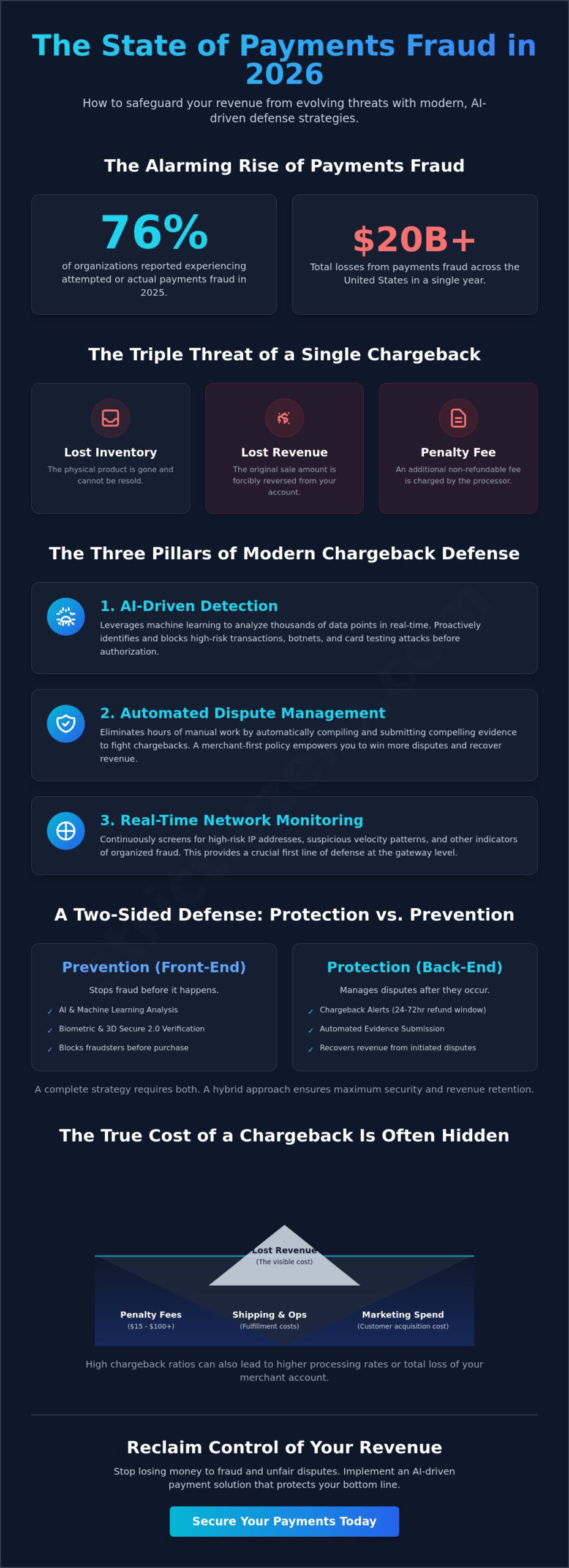
In 2025, a staggering 76% of organizations reported experiencing attempted or actual payments fraud, contributing to over $20 billion in total losses across the United States. It’s incredibly frustrating to watch your hard-earned revenue and physical inventory vanish simultaneously, especially when your current processor seems to automatically side with the bank during every dispute. You’re likely tired of high chargeback fees piling up on top of lost sales and feeling like you’re fighting a losing battle against friendly fraud and sophisticated AI-driven scams.
Choosing a payment processor with fraud prevention isn’t just a technical choice; it’s a vital defense for your bottom line. This 2026 guide shows you how to reclaim control by leveraging AI-driven fraud prevention and automated dispute evidence submission to lower your chargeback ratios. You’ll learn how to safeguard your revenue with advanced protection strategies and profit-offsetting tools like surcharge engines. We’ll also preview how to stay ahead of the latest security trends, from mandatory Strong Customer Authentication to the global transition toward ISO 20022 structured data standards.
Key Takeaways
- Learn how a merchant-first dispute policy transforms security from a basic feature into a comprehensive revenue protection suite.
- Identify how a payment processor with fraud prevention uses machine learning to stop suspicious transactions before they impact your inventory.
- Compare the benefits of real-time chargeback alerts against insurance models to determine which strategy best recovers your lost revenue.
- Evaluate potential providers based on their automated dispute evidence submission capabilities and their ability to integrate with your existing e-commerce site.
- Discover how to maintain compliance and protect your bottom line using smart pricing engines that offset the costs of modern security.
What is a Payment Processor with Chargeback Protection?
A chargeback protection suite is much more than a single toggle in your dashboard. It’s a complex ecosystem of security protocols that work in real time to secure your business. Your Payment service provider (PSP) should act as a shield, not just a middleman. While a standard processor might just pass along transaction data, a specialized payment processor with fraud prevention uses advanced gateway filters to screen for high-risk IP addresses and velocity patterns before a payment is even authorized. This initial screening is your first line of defense against botnets and mass-scale card testing attacks.
The biggest difference between providers lies in their dispute policy. Many legacy processors automatically side with the issuing bank to minimize their own risk, leaving you to handle the fallout. A merchant-first processor provides you with the evidence and automated tools needed to fight back effectively. This matters because chargebacks are a triple threat. You lose the inventory, you lose the revenue, and you’re hit with a heavy penalty fee. Over time, these disputes can permanently damage your reputation with card networks, making it harder to maintain your account.
To better understand how these systems work together, watch this helpful video:
The True Cost of a Chargeback in 2026
By 2026, the financial impact of a single dispute has grown. You aren’t just losing the cost of the item. You’re losing shipping costs, the marketing spend used to acquire that customer, and a chargeback fee that often exceeds the profit margin of the sale itself. The FBI’s Internet Crime Complaint Center reported that payment fraud resulted in $20.877 billion in losses in 2025. If your chargeback ratio climbs too high, you risk being placed in a monitoring program. This leads to higher processing rates or the total loss of your merchant account. Friendly fraud, where customers exploit the system to get free products, now accounts for a massive portion of these digital losses.
Protection vs. Prevention: Knowing the Difference
Prevention and protection are two sides of the same coin. Prevention focuses on the front end. It uses AI and machine learning to analyze thousands of data points in milliseconds. This stops a fraudster before they can even click the buy button. Protection handles the back end. It involves tools like chargeback alerts that give you a 24 to 72 hour window to issue a refund and avoid a formal dispute. You need both to survive. A payment processor with fraud prevention that only offers one layer leaves your business exposed. A hybrid approach ensures you stop the obvious criminals while maintaining the ability to resolve honest mistakes with real customers.
The Three Pillars of Modern Chargeback Defense
Defense strategies have evolved from simple block lists to sophisticated, proactive ecosystems. A modern payment processor with fraud prevention relies on three core pillars: AI-driven detection, automated dispute management, and real-time network monitoring. These systems work together to combat common types of financial fraud that cost businesses billions annually. By integrating these pillars, you can stop suspicious activity before it hits your bank account while ensuring that legitimate customers enjoy a smooth checkout process.
Identity verification has also taken center stage in 2026. With the rise of biometric confirmation and the global adoption of the 3D Secure 2.0 protocol, verifying a buyer’s identity is more accurate than ever. Instead of relying on static passwords that are easily stolen, modern systems check fingerprints or facial scans. This shift is crucial because fraudsters are increasingly using AI to mimic human behavior. In 2025 alone, AI-assisted fraud resulted in $893 million in losses, according to the FBI’s Internet Crime Complaint Center. To stay protected, many merchants are switching to a payment processor with fraud prevention that automates the collection of dispute evidence, saving hours of manual labor every week.
AI and Machine Learning in Fraud Prevention
Modern AI doesn’t just follow a set of rigid rules. It uses machine learning to analyze thousands of data points, including IP addresses, transaction velocity, and device IDs, in just a few milliseconds. This dynamic risk scoring compares each transaction against a massive history of network data to spot anomalies that a human would miss. By using these adaptive models, your system can identify a high-risk transaction from a specific region or a suspicious device instantly. These intelligent systems learn from every transaction to reduce false positives, ensuring your real customers don’t face unnecessary friction during their purchase.
The Role of 3D Secure 2.0
As of 2026, Strong Customer Authentication (SCA) is a mandatory requirement for online payments. The 3D Secure 2.0 (3DS2) protocol is the primary tool for meeting these standards. It’s non-negotiable for high-risk industries because it provides a vital liability shift. When a transaction is authenticated via 3DS2, the financial responsibility for a fraudulent chargeback often moves from the merchant to the card issuer. This protocol balances security with user experience. It allows for a frictionless flow where low-risk transactions pass through without extra steps, while high-risk ones require multi-factor authentication. This keeps your conversion rates high while virtually eliminating the risk of unauthorized transaction disputes.
Chargeback Insurance vs. Chargeback Alerts: Which Saves More?
Many merchants assume all security tools are the same. In reality, the difference between alerts and insurance is massive. Choosing a payment processor with fraud prevention that integrates both can determine whether your merchant account survives the next year or gets terminated. Chargeback alerts act like an early warning system. Providers like Ethoca and Verifi give you a 24 to 72 hour head start before a dispute is officially registered. This allows you to refund the customer immediately. By doing so, you stop the chargeback from ever reaching the card networks. This keeps your merchant health score low, which is essential for long-term stability.
On the other hand, chargeback insurance works like a traditional policy. You pay a fee, and if a fraudulent dispute occurs, the insurance provider reimburses you for the lost transaction value. While this sounds great for cash flow, it doesn’t stop the dispute from counting against your chargeback ratio. If you have too many “insured” losses, your processor might still see you as high risk. A smart strategy often prioritizes alerts to keep the account clean while using insurance as a backup for high-ticket items. This balanced approach is vital since payment fraud in the United States reached $20.877 billion in losses in 2025.
Chargeback Alerts: Stopping the Clock
The mechanism behind an alert is simple yet powerful. When a cardholder calls their bank to dispute a charge, the alert provider intercepts that request. This creates a refund-to-cancel workflow. Instead of the bank filing a formal chargeback, you get a notification to resolve the issue. In 2026, these alerts are the best way to protect your processing longevity. By resolving the issue before it becomes a legal dispute, you avoid the heavy fees associated with formal chargebacks. Top providers like Ethoca and Verifi are now standard integrations for any serious merchant. They help you maintain a healthy relationship with card brands by keeping your dispute numbers within acceptable limits.
Chargeback Insurance: Financial Peace of Mind
Chargeback insurance provides a safety net for revenue recovery. Most policies cover unauthorized transactions or “item not received” claims that turn out to be fraudulent. However, they often exclude friendly fraud or disputes related to service quality. The claim process still requires work. You’ll need to provide evidence like delivery confirmation or communication logs to get paid. This is why insurance is usually a secondary line of defense. It helps you recover the money, but it doesn’t protect your reputation with the bank. In an era where 76% of organizations report fraud attempts, relying solely on insurance is a gamble that could lead to account monitoring or higher processing fees.
How to Choose a Processor That Protects Your Bottom Line
Selecting the right payment processor with fraud prevention requires a shift in perspective. You shouldn’t just look at the monthly cost; you should evaluate the platform’s actual “Dispute Win Rate.” High-quality processors use automated tools to pull transaction data, delivery confirmation, and customer IP history into a single evidence package. This level of automation can be the difference between winning a friendly fraud case and losing both the inventory and the revenue. You also need to confirm that these security features integrate perfectly with your existing virtual terminal or e-commerce site without requiring complex custom coding.
Transparency in your fee structure is equally important. Many providers lure merchants in with low rates but then add “fraud protection surcharges” or per-transaction screening fees that eat into your margins. Look for a partner that offers clear, predictable costs. Additionally, prioritize providers that offer human support for high-stakes dispute resolution. When a sophisticated fraud attempt targets your business, having an expert who understands the 2026 regulatory landscape is far more valuable than a generic help article.
The Zero-Fee Advantage: Offsetting Protection Costs
Modern security isn’t free, but it can be funded strategically. Implementing zero fee credit card processing allows you to eliminate the burden of interchange fees entirely. By using a surcharge or dual pricing engine, you shift the cost of processing to the transaction itself. This creates a massive ROI because the money you save on traditional processing can be reinvested into advanced AI-driven fraud prevention. Profitable merchants use this strategy to build a “security war chest” without hurting their net income. If you want to see how these savings can protect your business, review our smart pricing and fraud intelligence tools.
Questions to Ask Your Potential Processor
Before you sign a contract, put your potential partner to the test with these specific questions:
- Do you provide automated evidence submission for disputes? This is the only way to scale your defense without hiring a full-time dispute manager.
- What is the average turnaround time for a chargeback alert? In 2026, you need that 24 to 72 hour window to issue a refund and avoid a mark against your merchant ratio.
- Can I customize fraud rules based on my specific industry? A jewelry store and a digital SaaS company face different risks; your filters should reflect that.
Strictly: Unified Processing with AI-Driven Fraud Prevention
Strictly provides an API-first platform designed to solve the security challenges discussed throughout this guide. As a payment processor with fraud prevention built directly into its core, we use machine learning to analyze every transaction in real time. This isn’t just about stopping a single bad actor; it’s about building a long-term defense that adapts to new threats as they emerge. Our omni-channel payment processing ensures that whether you’re taking a payment through a virtual terminal, sending a digital invoice, or processing an online order, your security protocols remain consistent. This unified approach eliminates the data fragmentation that often creates blind spots for fraudsters to exploit.
Why Strictly is the Choice for High-Growth Merchants
Choosing the best credit card processing for small business in 2026 requires more than just low rates. It requires a partner that understands the complexity of modern dispute management. Strictly provides a dedicated support team to help you handle complex disputes and resolution scenarios. We don’t just leave you with an automated dashboard. We offer the expertise needed to navigate the shifting regulatory landscape, including the new ISO 20022 standards for structured data. This hands-on approach helps you maintain a low chargeback ratio and avoid the monitoring programs that can cripple a growing business.
Getting Started with Proactive Protection
Switching to a more secure platform shouldn’t be a headache. Our onboarding process is designed to be seamless, allowing you to integrate Strictly with your existing e-commerce workflow or retail operations quickly. You can start leveraging our AI-driven fraud prevention and partner management tools without disrupting your daily sales. We also offer POS lending options and virtual terminal capabilities to help your business scale securely. Don’t wait for the next wave of AI-assisted fraud to impact your bottom line. Secure your revenue and eliminate unnecessary fees today by partnering with a payment processor with fraud prevention that puts your security first.
Secure Your Bottom Line with Modern Defense
The landscape of 2026 demands more than just basic transaction processing. Moving beyond static rules to dynamic AI risk scoring is essential to stop the multi-billion dollar fraud wave hitting American businesses. You’ve seen how chargeback alerts provide a critical head start that insurance simply can’t match, keeping your merchant account in good standing with card networks. Selecting a payment processor with fraud prevention that integrates these tools while offering a compliant surcharge engine ensures you don’t have to choose between security and profitability.
Strictly supports your growth with 99.9% platform uptime and a unified approach to omni-channel security. It’s time to stop reacting to disputes and start preventing them. Secure Your Revenue with Strictly’s AI-Driven Processing and reclaim your peace of mind. You have the tools to protect your hard-earned revenue; now it’s time to put them to work. By combining elite fraud intelligence with a smart pricing engine, you can focus on scaling your business while we handle the complexities of the modern payment ecosystem.
Frequently Asked Questions
What is the difference between a refund and a chargeback?
A refund is a voluntary return of funds that you initiate through your virtual terminal to resolve a customer issue directly. In contrast, a chargeback is a forced reversal of funds triggered by the cardholder’s bank. While a refund only costs you the transaction value, a chargeback includes extra penalty fees and damages your merchant health score. Using a payment processor with fraud prevention helps you identify when to issue a refund early to avoid these formal disputes.
Does every payment processor offer chargeback protection?
No, many standard processors provide only basic encryption and leave the burden of dispute management entirely on the merchant. Specialized providers offer a much deeper security suite that includes automated evidence collection and real-time monitoring. You should look for a partner that prioritizes merchant-first policies rather than one that automatically sides with the bank. A dedicated payment processor with fraud prevention is essential if you operate in high-risk industries or handle large transaction volumes.
How much does chargeback protection typically cost in 2026?
Can chargeback protection help with friendly fraud?
Yes, advanced protection tools are specifically designed to combat friendly fraud by capturing concrete evidence at the moment of purchase. These systems log data points like the customer’s IP address, device ID, and geographic location. When a customer falsely claims they didn’t authorize a purchase, this data is automatically compiled into a dispute response. This automated evidence submission significantly increases your chances of winning a case that would otherwise be a total loss.
What is an Ethoca or Verifi alert?
Ethoca and Verifi alerts are early warning notifications that inform you when a customer has contacted their bank to dispute a charge. This happens before the dispute turns into a formal chargeback, giving you a 24 to 72 hour window to resolve the issue. If you issue a refund during this time, the bank cancels the chargeback process. This protects your merchant account ratio and helps you avoid the heavy fees associated with traditional disputes.
Will chargeback protection guarantee I never lose a dispute?
No system can provide a 100% guarantee that you’ll never lose a dispute, but these tools drastically improve your win rates. Protection suites focus on reducing the frequency of fraudulent claims and providing the best possible evidence for legitimate sales. While some “friendly fraud” cases are still difficult to win, having a proactive defense ensures that you aren’t an easy target. It’s about mitigating risk and recovering as much revenue as possible.
How does a surcharge program help with chargeback costs?
A surcharge program helps by shifting the cost of credit card processing fees to the customer, which eliminates a major operational expense. You can then reinvest these significant savings into your fraud prevention budget. By using a surcharge or dual pricing engine, the money that used to go toward interchange fees can now pay for advanced AI filters and chargeback alert services. This strategy allows you to build a top-tier security stack without reducing your net profit.
Is chargeback insurance worth it for a small business?
Chargeback insurance can be worth it if you sell high-ticket items where a single fraudulent loss would be devastating to your cash flow. However, it’s often considered a secondary line of defense. Since insurance doesn’t stop the dispute from counting against your merchant ratio, it won’t protect you from account termination if your numbers get too high. Most small businesses find that proactive alerts and AI screening provide a better long-term return on investment than insurance alone.