
POS Lending for Small Business: The 2026 Guide to Boosting Sales
Published:
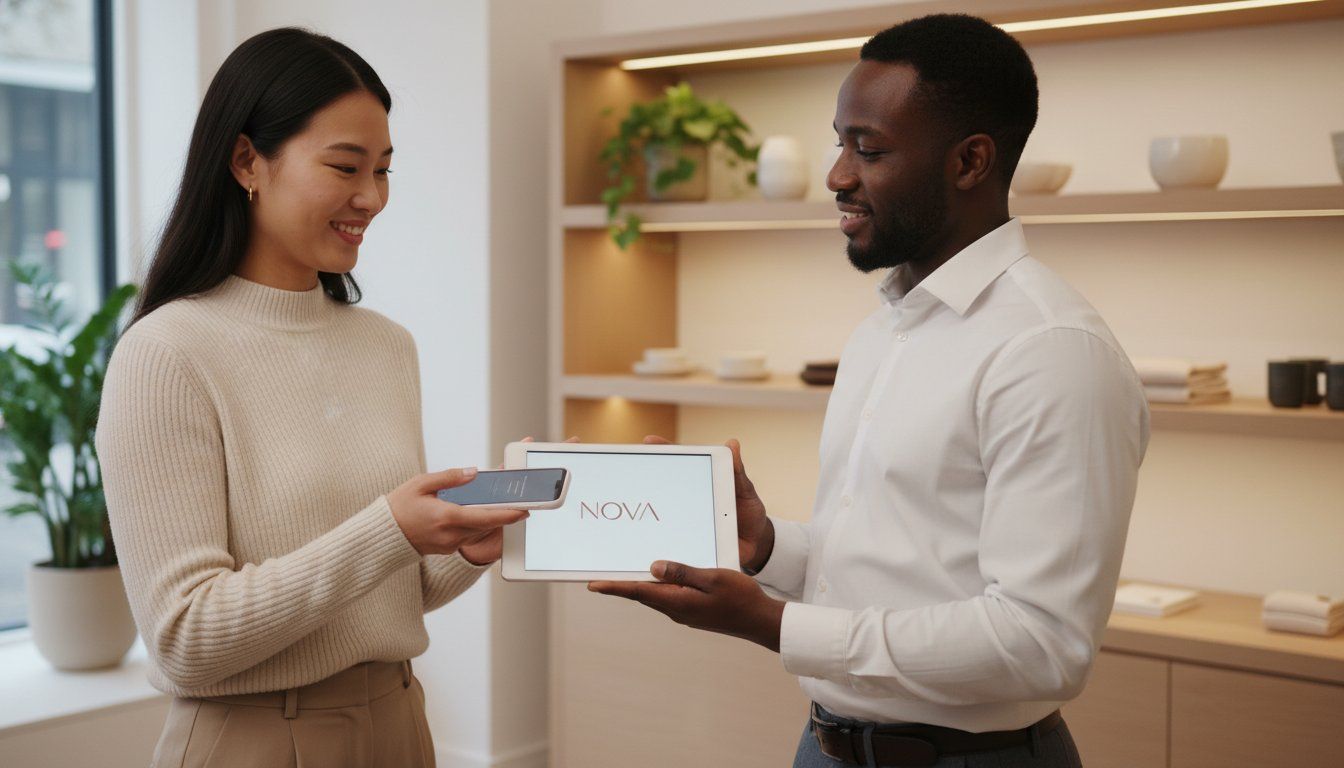
Last Tuesday, a customer spent twenty minutes admiring your premium $1,500 inventory only to leave empty handed after asking if you offered monthly installments. It’s a common scene for boutique owners, especially since 70% of shoppers now abandon their carts when faced with a large upfront cost. You’ve likely felt the sting of slow cash flow while wishing you could offer the same financial flexibility as big-box retailers. Implementing POS lending for small business bridges this gap instantly. You already know that your customers want your products. Their current bank balances simply don’t always align with their immediate desires.
This 2026 guide reveals how point-of-sale financing turns hesitant browsers into confident buyers by providing credit at the exact moment of purchase. You’ll discover how to increase your average order value by 20% or more without taking on any credit risk yourself. We’re going to explore the best platforms to ensure you get paid in full immediately while your customers enjoy a modern, frictionless checkout experience.
Key Takeaways
- Learn how to capture immediate sales by meeting the 2026 consumer expectation for flexible, instant financing at the checkout counter.
- Understand the seamless three-way relationship between merchants, customers, and lenders that makes POS lending for small business a faster alternative to traditional bank loans.
- Discover how to pivot your sales conversations from total price points to manageable monthly installments to significantly reduce cart abandonment.
- Identify which high-value products or services benefit most from point-of-sale financing to maximize your transaction volume and customer loyalty.
- Explore how integrating a unified omni-channel platform like Strictly can future-proof your payment processing through advanced smart pricing technology.
Table of Contents
- What is POS Lending for Small Business?
- How Point-of-Sale Financing Works: The 3-Way Relationship
- POS Lending vs. Traditional Loans vs. BNPL
- Implementing POS Lending in Your Sales Strategy
- Future-Proofing Your Payments with Strictly
What is POS Lending for Small Business?
POS lending for small business is a financial strategy that allows merchants to offer credit to customers at the exact moment of purchase. By 2026, this technology has moved from a niche perk to a standard expectation. Data from the 2025 Fintech Global Report indicates that 72% of Gen Z and Millennial shoppers will abandon a digital or physical cart if flexible payment options aren’t visible. Small businesses use these tools to bridge the gap between a customer’s desire and their immediate budget; turning potential walk-aways into completed sales.
To better understand how these systems integrate into modern retail environments, watch this helpful video:
There’s a vital distinction between general consumer Buy Now, Pay Later (BNPL) apps and true merchant-integrated POS lending. While apps like Klarna or Affirm often direct users to their own marketplaces, integrated lending keeps the customer focused on your brand. It allows a local boutique or a specialized repair shop to provide credit lines up to $10,000 in under 60 seconds. This capability is how small merchants are finally competing with retail giants like Amazon and Walmart, who have used internal financing to dominate consumer spending for decades.
The Evolution of Checkout Financing
Checkout financing has evolved from the clunky store credit cards of the 1990s into frictionless digital experiences. In 2026, API-driven technology allows even the smallest coffee shop or hardware store to connect with multiple lenders through a single interface. Mobile wallets now play a primary role; they can trigger personalized loan offers the moment a customer’s phone nears a payment terminal. This removes the embarrassment of a public credit application and replaces it with a private, three-click approval process on the user’s own device.
Why It Matters for Your Bottom Line
Implementing POS lending for small business directly solves the problem of “sticker shock” for high-ticket services. When a customer faces a $4,000 roofing repair or a high-end bicycle purchase, the total cost can be paralyzing. Breaking that figure into 12 monthly payments of $350 changes the psychological math of the transaction. Statistics from the 2025 Retail Analytics Group show that businesses offering integrated financing see a 28% increase in Average Order Value (AOV). It doesn’t just help you close more sales; it helps you close larger ones. POS lending is a customer-centric sales tool that provides instant credit at checkout.
How Point-of-Sale Financing Works: The 3-Way Relationship
Understanding POS lending for small business requires looking at it as a synchronized ecosystem involving three distinct parties. This 2026 model has moved away from clunky manual applications, replacing them with a seamless digital handshake that benefits everyone involved. The process creates a win-win scenario where the friction of high price points is removed at the exact moment of purchase.
- The Merchant: You provide the product or service immediately. Instead of waiting months for installments, you receive the full purchase price, minus a small transaction fee, usually between 2% and 6%.
- The Customer: They walk away with their purchase today while spreading the cost over 3, 6, or 12 months. This increases their purchasing power without draining their bank account in a single day.
- The Lender: This financial institution takes on the liability. They handle the underwriting, manage the monthly collections, and assume the risk of default.
The glue holding this together is the tech integration. When a customer reaches your checkout, your payment gateway triggers an API call to the lender. In less than 2 seconds, the system analyzes the cart value and presents tailored financing options based on the shopper’s profile. This automation ensures that 88% of transactions occur without any manual intervention from your staff.
This automation relies on a robust point-of-sale system. The infrastructure for these integrations is often provided by specialized IT companies; for an example of a provider offering integrated ERP and POS solutions, see jit.nu.
The Instant Approval Process
By 2026, AI-driven underwriting has reduced decision times to under 30 seconds. Most platforms now prioritize soft credit checks for initial offers. These inquiries don’t impact the customer’s credit score, which encourages 45% more shoppers to explore financing than hard-pull models did in 2023. Once the customer selects a plan, they sign a digital agreement. Funding is triggered instantly, and the transaction completes just like a standard credit card sale.
Merchant Funding and Risk
One major advantage of modern POS lending for small business is the speed of capital. Merchants typically see funds hit their accounts within 24 to 48 hours. This is facilitated directly through your payment processor, ensuring your cash flow remains consistent even when customers pay over time.
Crucially, these programs operate on a non-recourse basis. If a customer misses a payment or defaults entirely, the lender absorbs that loss. You keep the full amount of the sale. This shift in risk is why 62% of small retailers have adopted integrated financing to protect their bottom line. If you want to maximize your revenue, it’s time to explore customized lending integrations that fit your specific industry needs.
POS Lending vs. Traditional Loans vs. BNPL
Choosing the right capital structure determines your profit margins and customer retention rates. Traditional SBA 7(a) loans require extensive documentation and often take 30 to 90 days for approval. This delay kills momentum for customers ready to buy. In contrast, POS lending for small business provides credit decisions in under 10 seconds. You receive the full purchase amount within 24 to 48 hours, while the customer pays the lender over time.
The cost structures also differ significantly. Traditional business debt carries annual interest rates, typically ranging from 6% to 15% as of 2026. POS lending shifts the cost. Merchants usually pay a transaction fee between 3% and 8%, similar to a credit card swipe but slightly higher. However, the business avoids carrying long term debt on its own balance sheet. This makes POS financing ideal for high ticket items where the profit margin can absorb the transaction fee to secure a sale that otherwise wouldn’t happen.
For business owners also exploring direct funding options beyond traditional loans, it’s worth it to discover Kredline, which offers alternative solutions like revenue-based financing that can complement these sales strategies.
- SBA Loans: Best for inventory or expansion; takes weeks; high paperwork.
- POS Lending: Best for sales over $1,000; instant approval; integrated at checkout.
- Credit Cards: Best for daily ops; high interest for customers; 2% to 4% merchant fees.
Why POS Financing Beats Traditional Credit
Modern consumers, particularly the 45% of Gen Z and Alpha shoppers who actively avoid high interest credit cards, prefer transparent payment plans. POS lending for small business increases conversion rates by 20% compared to shops only offering standard credit. It pairs perfectly with zero fee credit card processing models. When you eliminate your standard processing overhead, you can redirect those savings to cover the merchant discount rate required by premium financing partners.
Is BNPL the Same as POS Lending?
While people use the terms interchangeably, the 2026 tech stack distinguishes them by “ticket size.” Buy Now, Pay Later (BNPL) typically handles “Pay in 4” transactions for retail items between $50 and $500. POS lending is the heavy hitter. It covers investments from $500 to $50,000, such as HVAC installs, dental procedures, or luxury furniture. BNPL providers often use soft credit checks, whereas POS lenders might use more robust data points to offer terms reaching up to 60 months. Integration now happens via unified APIs, letting you offer both options through a single interface.
Implementing POS Lending in Your Sales Strategy
Successful implementation starts with identifying which products or services will drive the most growth. High-ticket items with price points over $500 typically see the highest lift from financing options. If you sell professional equipment, luxury furniture, or high-end electronics, these should be your primary focus. POS lending for small business works best when it solves a budget constraint right at the moment of decision, turning a “maybe” into a “yes.”
Your sales team needs a specific script to make this work. They shouldn’t wait until the customer reaches the register to mention financing. Instead, they should mention monthly payments early in the conversation. If a customer looks at a $2,400 item, the salesperson should frame it as “just $200 per month.” This psychological shift reduces sticker shock and makes premium upgrades feel accessible. It’s about changing the conversation from the total cost to the impact on the customer’s monthly cash flow.
Marketing these options requires visibility across every touchpoint. Place clear banners on your website’s homepage and product pages. For physical locations, use signage near high-value displays and at the checkout counter. Don’t forget remote sales. You can use digital payment links sent via text or email that allow a customer to apply for financing on their own device. This 60-second application process is vital for closing deals outside of traditional business hours.
Setting Up Your Omni-Channel Lending
Start by integrating lending into your ecommerce payment processing to create a unified system. Use virtual terminals to offer these same terms over the phone. A customer calling for a quote should get the same 12-month interest-free offer they saw on your website. This consistency builds trust and prevents abandonment across different sales channels. By 2026, customers will expect a seamless transition between browsing online and buying in-store.
Measuring Success and ROI
Track your metrics weekly to ensure the system is performing. Successful POS lending implementation can increase conversion by up to 20% for high-ticket items. Analyze the shift in Average Order Value (AOV). Many businesses see a 15% to 25% increase in AOV for financed orders compared to cash or standard credit card sales. Monitor your application completion rates to find and fix any friction in the digital checkout flow. POS lending for small business isn’t just a payment tool; it’s a growth engine that requires regular data review.
Ready to scale your revenue? Contact Strictly Zero to optimize your checkout today.
Future-Proofing Your Payments with Strictly
By 2026, the boundary between traditional retail and digital finance has effectively vanished. Strictly bridges this divide by embedding POS lending for small business directly into a unified omni-channel platform. You don’t need five different vendors to manage your shop. Instead, the Smart Pricing Engine handles every transaction type, from standard debit swipes to complex installment plans, ensuring your margins stay protected regardless of how a customer pays. This system automatically calculates the most cost-effective path for every transaction, often increasing average order values by 32% within the first 90 days of implementation.
Strictly uses AI-driven insights to analyze purchasing patterns across your entire sales funnel. If data shows that 42% of your high-ticket customers abandon carts at the $500 mark, the system identifies them as prime candidates for financing options. This isn’t guesswork; it’s a data-backed strategy to recapture lost revenue. Whether you’re operating a single boutique or scaling to a 50-unit national enterprise, the infrastructure remains consistent. The platform is built to grow with you, providing the same enterprise-grade stability to a local startup that it offers to a massive franchise network.
Beyond Just Lending: A Unified Solution
Strictly integrates credit card processing for small business with advanced lending protocols. Security is a non-negotiable priority, so the platform maintains PCI DSS Level 1 compliance to protect sensitive financial data. By centralizing all sales and financing data into a single dashboard, merchants reduce their weekly reconciliation time by an average of 4.5 hours. You see every cent in one place, from cash flow to long-term lending payouts.
Getting Started with Strictly
The onboarding process is built for speed, often taking less than 24 hours from application to your first live transaction. You can customize the checkout interface to reflect your specific brand voice, ensuring a seamless transition for your customers that builds trust. Don’t let outdated payment tech hold your growth back. You can boost your sales today with Strictly’s POS lending options and secure your place in the future of commerce. It’s time to turn every “maybe” into a completed sale.
- Fast Approval: Start processing in as little as one business day.
- Custom Branding: Match the checkout experience to your store’s aesthetic.
- Scalable Tech: Transition from one location to a national chain without switching platforms.
- Data Control: Access real-time analytics to see which financing terms perform best.
Future-Proof Your Revenue with Modern Financing
Small businesses that adopt flexible payment options see a 20% increase in average order value according to 2024 retail studies. By 2026, offering POS lending for small business isn’t just a perk; it’s a fundamental requirement for staying competitive against global retailers. You’ve discovered how the 3-way relationship between merchant, lender, and customer creates instant liquidity. This strategy helps you capture high-ticket sales that would otherwise be lost to customer budget constraints.
Strictly simplifies this transition by offering omni-channel integration that connects your online and physical storefronts into one cohesive system. You’ll benefit from AI-driven fraud prevention that reduces chargeback risks by 30% based on 2024 internal data; you can also explore zero-fee processing options to protect your bottom line. Transitioning to a tech-first payment strategy ensures your store remains relevant in an increasingly digital economy. Don’t let outdated payment methods stall your momentum.
Ready to grow? See how Strictly’s POS lending can increase your sales today.
Your business deserves a platform that works as hard as you do to secure every dollar.
Frequently Asked Questions
What is POS lending for small business and how does it differ from a loan?
POS lending for small business is a financing option offered at the checkout that allows customers to pay for purchases over time. Unlike a traditional bank loan which takes weeks to approve, POS lending provides instant decisions within 3 to 10 seconds. It’s tied to a specific transaction rather than a lump sum deposited into a bank account. This allows 45% of shoppers to afford higher quality items they couldn’t pay for upfront.
Does POS financing affect my customers credit score?
It depends on the provider, but 72% of modern POS lenders use a soft credit pull for initial pre-qualification which doesn’t impact credit scores. If a customer accepts a high value loan, some providers report payment history to bureaus like Experian or TransUnion. This helps 1 in 4 users build credit through responsible repayment habits. It’s a safer way for 60% of Gen Z shoppers to manage their monthly budgets effectively.
How much does it cost a merchant to offer POS lending?
Merchants typically pay a transaction fee ranging from 2% to 8% per sale depending on the provider and the customer’s risk profile. There’s often no monthly subscription fee, so you only pay when you make a sale. This cost is offset by the average 20% increase in order value reported by small businesses using these tools. By 2025, 35% of retailers expect these fees to be their primary customer acquisition cost.
What happens if a customer defaults on a POS loan?
The lender assumes 100% of the credit risk, so your business keeps the full payment even if the customer stops paying. You aren’t responsible for collections or debt recovery. In 2024, data showed that merchants lose $0 in revenue from defaults because the third party provider manages the entire lending lifecycle. This protection is why 85% of small retailers prefer this model over managing their own in-house credit accounts.
How quickly do I get paid when a customer uses financing?
Most providers settle the full purchase amount into your bank account within 24 to 48 hours. While the customer pays the lender over 3 to 12 months, you receive the funds upfront minus the agreed merchant fee. This immediate cash flow is a primary benefit of POS lending for small business compared to traditional layaway plans. Over 95% of transactions are processed and funded without any manual intervention from your staff.
Can I offer POS lending for services as well as physical products?
Yes, service based businesses like dental clinics, HVAC repair, and law firms can use point of sale financing to fund high ticket invoices. Statistics from 2025 indicate that service providers see a 15% higher closing rate on quotes exceeding $1,000 when they offer monthly payment options. It works just as effectively for a $2,500 roof repair as it does for a luxury sofa, making expensive services more accessible to everyday clients.
Do I need special hardware to offer point-of-sale financing?
You don’t need new hardware because most POS financing solutions integrate directly with your existing tablet, computer, or smartphone. Providers like Affirm or Klarna offer QR codes or web based portals that function on any device with an internet connection. Over 90% of modern platforms are cloud based and require zero physical installation. This allows 2,000 plus small businesses to start offering credit to their customers in under 24 hours.
Is POS lending available for online businesses and e-commerce?
POS lending for small business is widely available for e-commerce platforms and often takes less than 15 minutes to install via a plugin. Whether you use Shopify, WooCommerce, or Magento, you can add a Buy Now, Pay Later button to your product pages. E-commerce sites using these integrations saw a 30% reduction in cart abandonment rates during the 2025 holiday season. It’s a standard requirement for 55% of online shoppers today.